Tag Archives: reading

Empathy with the continuing background noise in society

Image of book cover for 'a flat place' by Noreen MasudResearch has shown that skimming while reading in digital media reduces the inclination and perhaps ability to engage in higher level reading, while a lack of higher-level reading practice compromises the efficacy of skimming when reading. Higher-level reading implies critical and conscious reading, slow reading, non-strategic reading and long-form reading, according to Schuller-Zwierlein et al, 2202.  The psychologist, Steven Pinker has argued that we learn empathy by immersing ourselves in other people’s minds through reading.  During a recent weekend break, I immersed myself in Noreen Masud’s beautiful book, ‘a flat place’.  It is a memoir about childhood trauma, patriarchy and colonialism told through stories associated with flatlands outside Lahore, at Orford Ness, the Cambridgeshire fens, Morecambe Bay and Orkney.  I read it while staying in the flat landscape around Dunham Massey between Warrington and Manchester which made the physical topography described by Masud resonate with me.  However, her reflections on her and our psyche were also deeply significant – she opens one chapter with a quote from Laura S Brown’s article, ‘Not Outside the Range: One Feminist Perspective on Psychic Trauma’, which perhaps is core to her story: ‘…the constant presence and threat of trauma in the lives of girls and woman of all colors, men of color…, lesbian and gay people, people in poverty and people with disabilities has shaped our society, a continuing background noise rather than an unusual event’.

Brown LS. Not outside the range: One feminist perspective on psychic trauma. American Imago. 119-33, 1991.

Masud N, a flat place, Hamish Hamilton, 2023

Schüller-Zwierlein A, Mangen A, Kovač M, van der Weel A. Why higher-level reading is important. First Monday. 27(5) Sep 5, 2022.
Clouds, bees and artificial friends

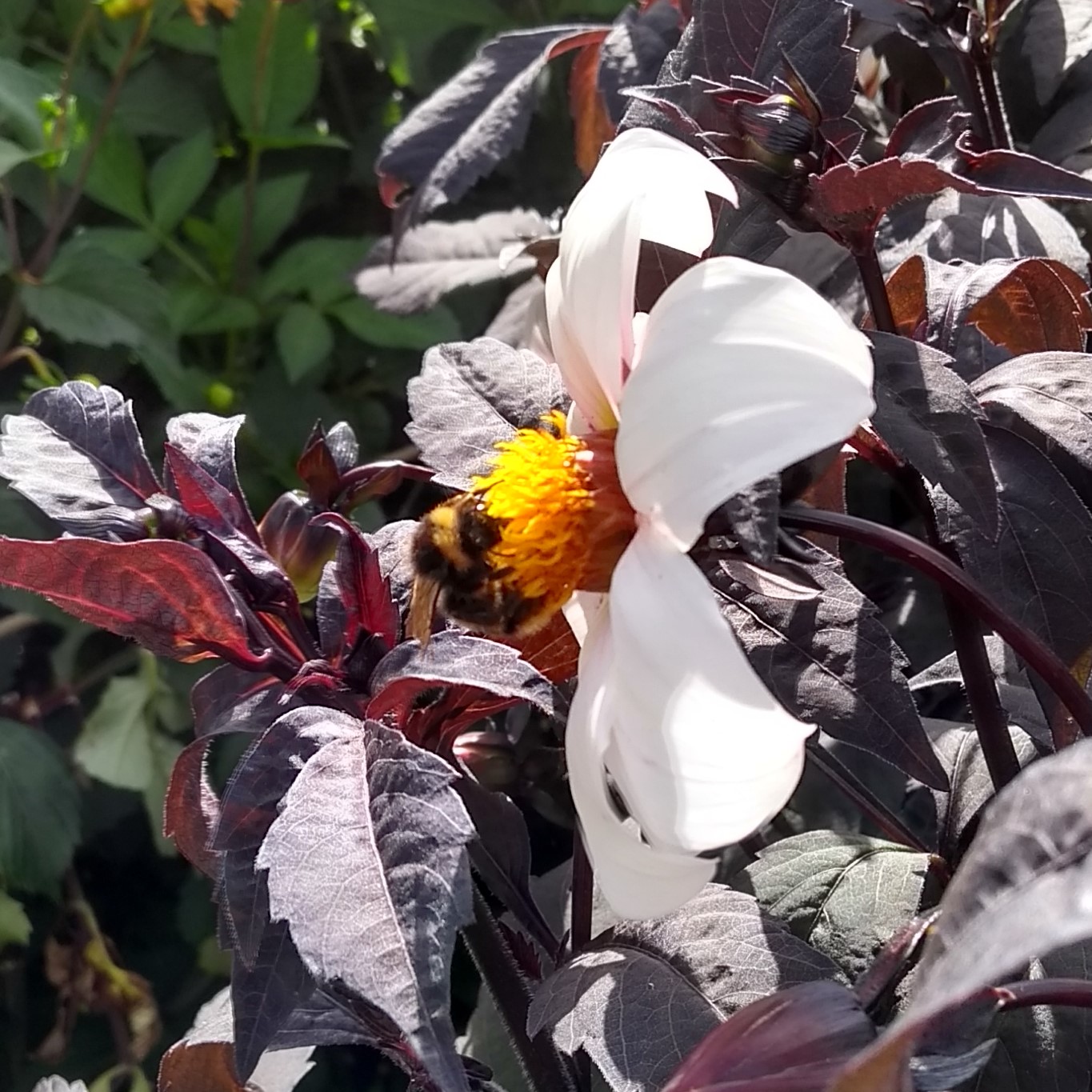
Decorative image of a bee on a flowerAnthropomorphism featured in several of the books that I read during my recent digital detox [see ‘Entropy and junkies‘ on August 2nd, 2023].  I really liked the opening section of ‘When I Sing, Mountains Dance‘ by Irene Sola which is narrated from the perspective of clouds that arrive over a landscape with painfully full ‘black bellies, burdened with cold, dark water, lightening bolts, thunderclaps.’  Her poetic prose, beautifully translated from the Catalan by Mara Faye Lethem, is wonderfully evocative and explores the complex relationship between people and the land they inhabit.  I was less impressed with a fig tree as a narrator in Elif Shafak’s novel ‘The Island of Missing Trees‘.  There was too much emphasis on facts about trees and their relationship to the fauna and flora around them which are well-described in recent non-fiction books [see, for example, ‘Tree are amongst the slowest moving being with which we share our world‘ on October 16th, 2019 and ‘The rest of the planat has been waiting patiently for us to figure it out‘ on September 21st, 2022].  However, I did enjoy the bee’s eye perspective on being trapped in a room when someone closed the window through which the bee had flown to find out what was happening inside.  At the moment, I am reading ‘Klara and the Sun‘ by Kazou Ishiguro, which is told from the perspective of Klara, an Artificial Friend or AF, and is in a similar vein to ‘Frankisstein‘ by Jeanette Winterson and ‘Machines like Me‘ by Ian McEwan [see ‘Where is AI on the hype curve?‘ on August 12th, 2020].


Mind-wandering guided by three good books

We took a long weekend break last week. We did some walking, read some books and not much else.  I read ‘A line in the world: a year on the North Sea Coast‘ by the Danish writer Dorthe Nors (translated by Caroline Waight).  The author, Jessica J. Lee, described this book as ‘starkly, achingly beautiful’ which aptly describes an exploration of history and memories associated with the wild and desolate west coast of Denmark. Then, I read ‘The Easy Life‘ by Marguerite Duras (translated by Olivia Baes and Emma Ramadan), written in 1943 when the author’s husband was a prisoner at Buchenwald for having been part of the French Resistance, as she was, and a year after the death of her younger brother which occurred just months after her child was stillborn.  The novel is about a murder, one of three deaths, which lead the narrator, 25-year-old Francine Veyrenattes, to flee the family farm for the seaside to contemplate her borderless grief and the endless sea.  The third book I read during our weekend break was ‘German Fantasia‘ by Philippe Claudel (translated by Julian Evans), which Le Monde described as ‘Dark, sober and strong’.  It is a series of interconnected short stories in which the characters’ reflections play as large a part in the story as the action as they navigate a post-war landscape.  These three books probably suited my mood on a cold, dark February weekend; however, they are beautifully written and in relatively few words create the mental constructs that allow you to live the experiences of the protagonists in the latter two books and the author in the first book.  They are exemplars of the kind of writing Mary Midgley exhorts us to produce – just enough words to bring to mind the appropriate constructs [see ‘When less is more from describing digital twins to protoplasm‘ on February 22nd, 2023].  They took my mind to new places away from everyday concerns which was the purpose of the long weekend break.

A conversation about a virtual world and global extinction

Photograph of an octopusI went for a haircut a week or so ago and my barber asked me about the books I had been reading recently.  He always has a book on the shelf next to him and sometimes I find him reading when I arrive and the shop is quiet.  So it is not unusual for us to talk about our current books.  I told him about ‘Reality+: virtual worlds and the problems of philosophy’ by David Chalmers which led into a conversation about the possibility that we are in a simulation.  My posts on this topic [see ‘Are we in a simulation’ on September 28th 2022 and ‘Virtual digitalism’ on December 7th, 2022] have provoked a number of negative reactions.  People either think I have written nonsense or would rather not consider the prospect of us being part of a giant simulation.  Fortunately, my barber was happy to accept the possibility that we were part of a simulation which led to a discussion about whether our creator was the equivalent of a teenager playing on a computer in their bedroom or a scientist interested in the evolution of society; and, in either case, why they would have decided to give us hair on our heads that grows steadily throughout our life – perhaps as a personal indication of the passage of time or, simply to provide a living for barbers.  The development of human society and the use of probability to reason that a more advanced society might have created a virtual world in which we are living also led us to talk about the probability that a more advanced society finding us on Earth would annihilate us without pausing to learn about us in the same way that we are destroying all other forms of intelligent life on the planet.  For example, populations of vertebrates living in freshwater ecosystems have declined by 83% on average since 1970 [see World Wide Fund for Nature Living Planet Report 2022].  Maybe it would be preferable for someone to switch off the simulation rather than to suffer the type of invasion mounted by the Martians in the War of the Worlds by HG Wells.

Regular readers with good memories might recall a post entitled ‘Conversations about engineering over dinner and a haircut’ on February 16th, 2022 which featured the same barber who I visit more frequently than these two posts might imply.

The image shows Ollie the Octopus at the Ocean Lab, (Ceridwen CC BY-SA 2.0) for more on the intelligence of an octopus see ‘Intelligent aliens?‘ on January 16th, 2019.