 What would you do if you found yourself face-to-face with a polar bear? Run? Probably not a good idea because polar bears regard anything that runs away as a potential meal and they can reach speeds of 40 kph or 25 mph, so they can easily outrun you. This question is probably theoretical one for most people, even though climate change is reducing the area of sea ice and forcing polar bears to forage on land, as far south as Newfoundland. However, it was one that we debated when planning our expedition to Greenland where we did expect to encounter them [see ‘Perched blocks and muskoxen‘ on February 4th 2026]. We considered taking firearms; however, to be effective you need a high-powered rifle and it would have been challenging to transport several from the UK to Greenland so that each group had one available when we were not working together. More importantly, we were visiting their domain and we had no desire to harm any polar bears. As an alternative, it was suggested to us that, like us, polar bears find it difficult to run downhill at speed and so this was a potential escape route but, of course, only if you are on a steep hill! In common with most animals, polar bears are frightened of fire so our chosen means of defence was to remove our shirt, douse it in the liquid stove fuel we were carrying, wrap it around one end of our ice-axe and set it alight as a flaming torch. We did see polar bears while we were in Greenland, always in the coastal regions and never near to our base camp. We kept our distance and moved cautiously so that our defence plan never had to be implemented. Nowadays, the internet provides advice for polar expeditions, see for example the guide of the International Polar Guides Association.
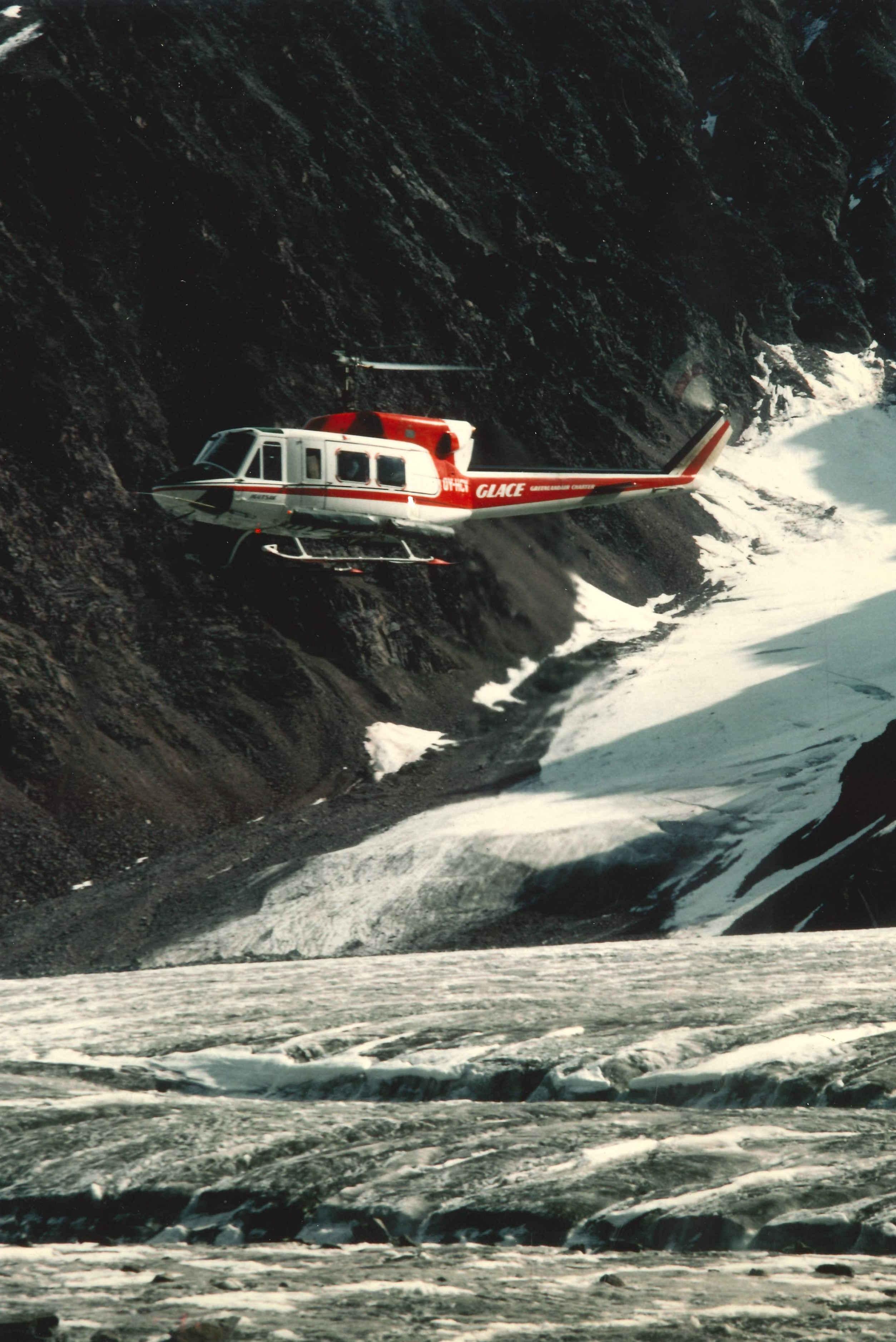
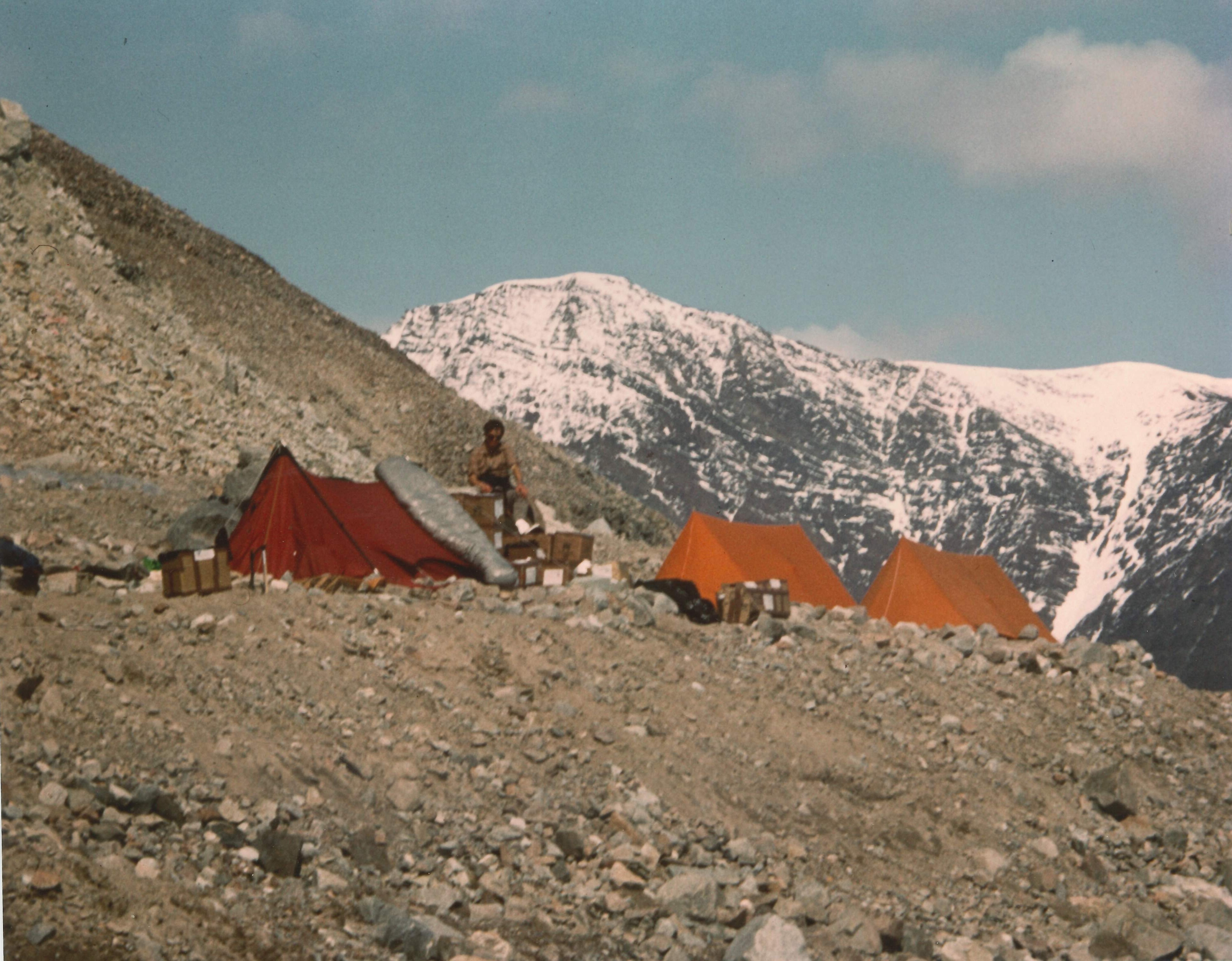 Images: helicopter over Bersaerkerbrae glacier after delivering supplies to base camp (top) and base camp on the western lateral moraine of the Bersaerkerbrae glacier (right). We never got close enough to a polar bear for a good photograph.

 Realize Engineering