Tag Archives: Engineering

Knowledge-economy

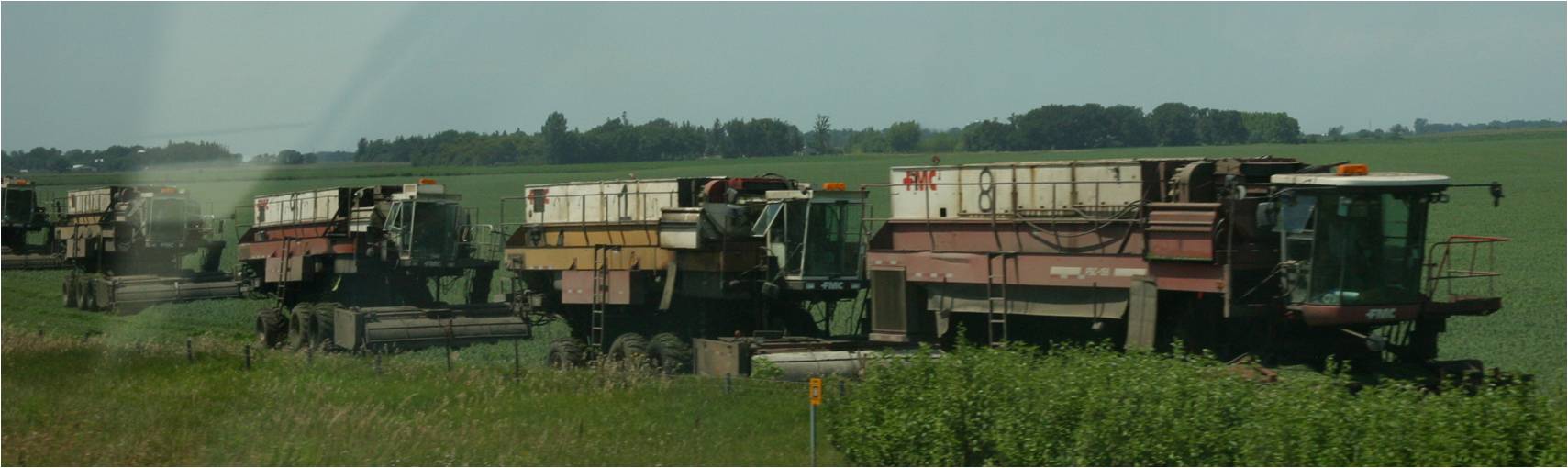
bigagSmall landholding farmers often have a wealth of local knowledge about their landscape and crop varieties that allows them to deliver food to the mouths of local customers more efficiently than industrial agriculture [see my post entitled ‘Productive Cheating on November 25th, 2013].  This has been termed ‘knowledge-based agriculture’ as opposed to the ‘energy-based agriculture’ used by agri-business with its dependence on fossil fuels and chemical fertilizers, which are also fossil fuel based.  Mark Bittman [in the New York Times on October 15th, 2013] argues it is easier to achieve sustainable food production using a knowledge-based rather than an energy-based approach.

The same is true of engineering design for sustainability.  Engineers need to exploit their creativity and knowledge to generate elegant designs with minimal ecological footprints, i.e. designs need to be knowledge-based or intensive rather than energy-intensive.

Politicians are fond of extolling the virtue of having a knowledge-based economy. I am not sure many of them would articulate it in terms of knowledge-based agriculture or engineering, as I have above, but it is probably the best available route to a sustainable society.

Happy New Year to all my readers and followers.

Source: http://www.nytimes.com/2013/10/15/opinion/how-to-feed-the-world.html?ref=markbittman&_r=0

Hiding in the basement

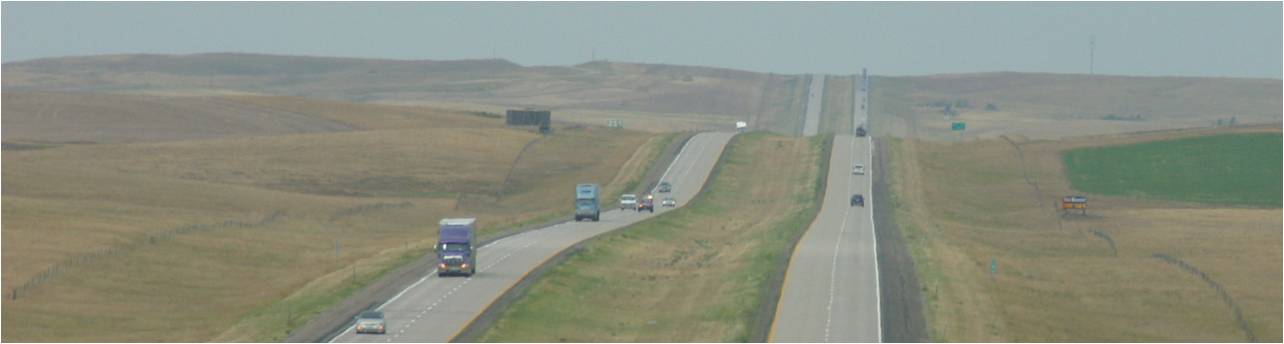
us highwayWhen we lived in the USA, I remember seeing billboards along the Interstate with messages from FEMA telling us ‘Be Ready’, to prepare, to plan, and to stay informed.  I was never quite sure what we were meant to be ready for since we lived in rural Michigan where we were fortunate not to experience violent weather and to be far from industrial plants that might explode and shower us with chemicals or radiation.  The billboard advertised the FEMA website [www.ready.gov] which contains very little factual information about radiation but does imply you should seek shelter in the basement of tall buildings in the event of a nuclear accident. Some commentators have suggested that the psychological effects arising from fear of nuclear radiation can cause more health issues than the dosage received especially for those not in the immediate vicinity of an incident.  So, knowing more about radiation in advance of an incident would be helpful and might also dispel many of the fears that cause opposition to nuclear energy.

So, does sheltering in a basement offer reasonable protection?  Well, radiation is produced when radioactive materials decay and their atoms release protons and neutrons from their nucleus plus some of the electrons that orbit the nucleus.  The protons and neutrons cluster together to form alpha particles (actually Helium nucleii) that are relatively massive and can stopped by a sheet of paper.  The electrons, known as beta radiation, whizz out at high-speed but can be stopped by a thin sheet of Aluminium.  High-energy photons are also released with the electrons and are known as Gamma radiation, which requires a sheet of lead or a considerable thickness of concrete to stop them.

So sheltering in the basement is a good idea especially if the building above contains a substantial amount of concrete.

Sources:

http://www.ready.gov/nuclear-power-plants

David Ropeik, Fear vs. radiation: The mismatch, in the International New York Times, Tuesday October 22, 2013. http://www.nytimes.com/2013/10/22/opinion/fear-vs-radiation-the-mismatch.html?_r=0

No coffee till Christmas

coffeeNot a decision to give up caffeine until the festive season but a remark by my Italian research student as he finished his cup of coffee on the flight back to England.  He doesn’t consider what we serve in the UK to be coffee and he won’t be back in Italy until the Christmas vacation.  We were in Italy visiting the laboratory with which we are collaborating on his research project.  He is right, the coffee gets much better as you move south and east from the US and UK.

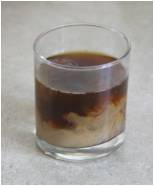
Next time you are enjoying a cup of coffee watch the swirls created as you or a friend stirs in some cream.  You can see streak lines that show the path of the cream in the coffee and reveal the fluid flow in your cup.  It is even better if you have a clear glass.  You can use this as an Everyday Engineering Example to capture students’ attention and to illustrate the kinematics of fluids as in the 5E lesson plan below.

5EplanNoF3_kinematics_of_fluid_motion