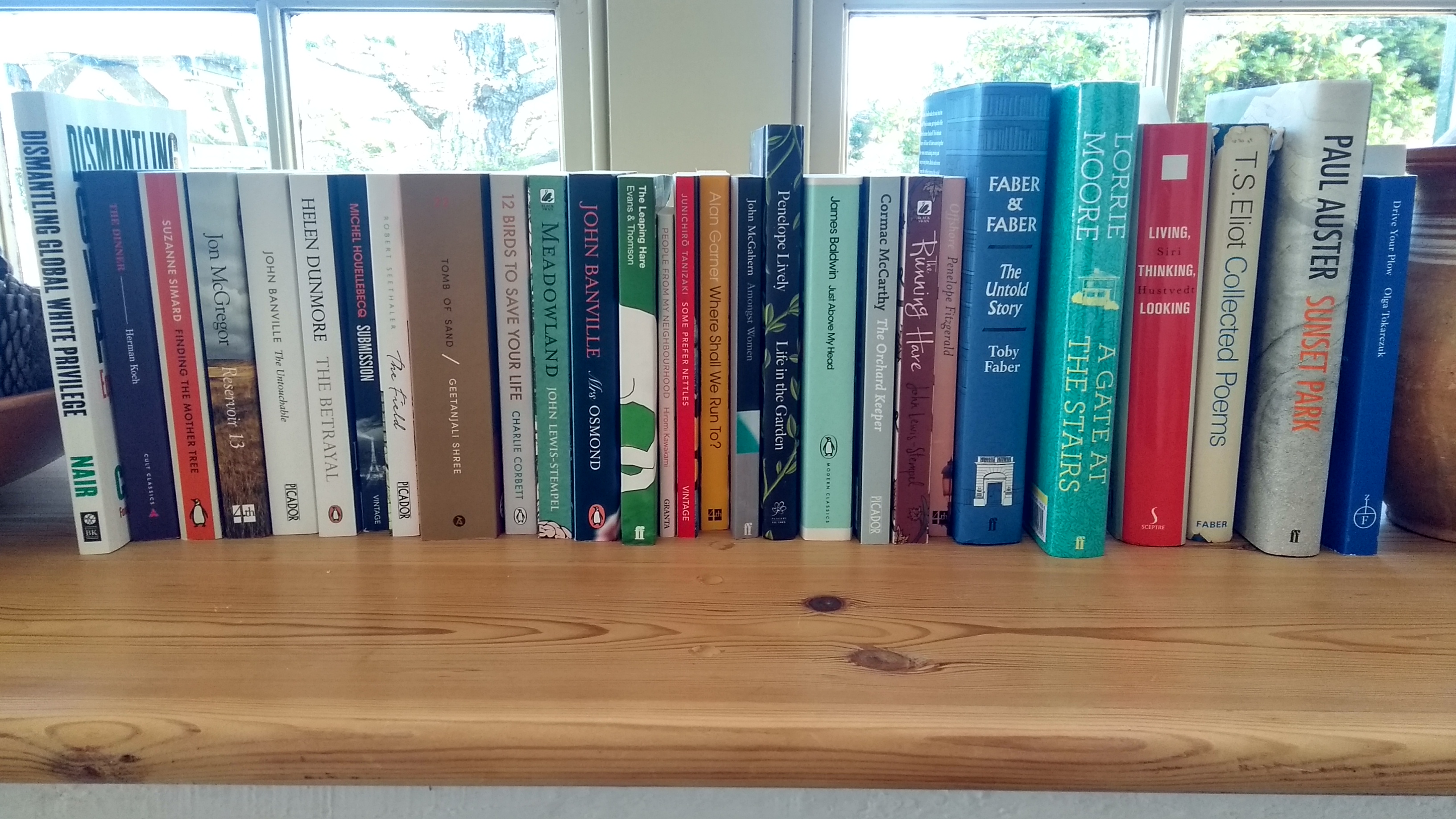
 We took a long weekend break last week. We did some walking, read some books and not much else. I read ‘A line in the world: a year on the North Sea Coast‘ by the Danish writer Dorthe Nors (translated by Caroline Waight). The author, Jessica J. Lee, described this book as ‘starkly, achingly beautiful’ which aptly describes an exploration of history and memories associated with the wild and desolate west coast of Denmark. Then, I read ‘The Easy Life‘ by Marguerite Duras (translated by Olivia Baes and Emma Ramadan), written in 1943 when the author’s husband was a prisoner at Buchenwald for having been part of the French Resistance, as she was, and a year after the death of her younger brother which occurred just months after her child was stillborn. The novel is about a murder, one of three deaths, which lead the narrator, 25-year-old Francine Veyrenattes, to flee the family farm for the seaside to contemplate her borderless grief and the endless sea. The third book I read during our weekend break was ‘German Fantasia‘ by Philippe Claudel (translated by Julian Evans), which Le Monde described as ‘Dark, sober and strong’. It is a series of interconnected short stories in which the characters’ reflections play as large a part in the story as the action as they navigate a post-war landscape. These three books probably suited my mood on a cold, dark February weekend; however, they are beautifully written and in relatively few words create the mental constructs that allow you to live the experiences of the protagonists in the latter two books and the author in the first book. They are exemplars of the kind of writing Mary Midgley exhorts us to produce – just enough words to bring to mind the appropriate constructs [see ‘When less is more from describing digital twins to protoplasm‘ on February 22nd, 2023]. They took my mind to new places away from everyday concerns which was the purpose of the long weekend break.
Mind-wandering guided by three good books
Leave a reply


 Realize Engineering