Category Archives: energy science

Hiding in the basement

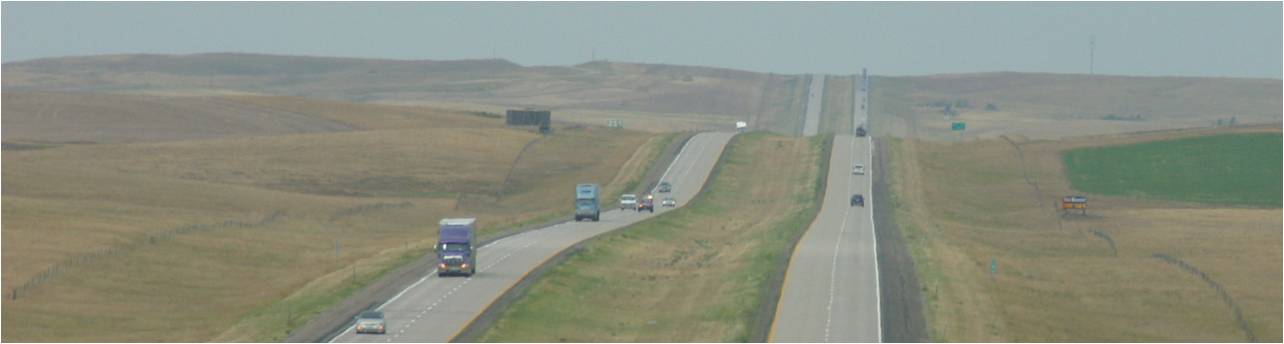
us highwayWhen we lived in the USA, I remember seeing billboards along the Interstate with messages from FEMA telling us ‘Be Ready’, to prepare, to plan, and to stay informed.  I was never quite sure what we were meant to be ready for since we lived in rural Michigan where we were fortunate not to experience violent weather and to be far from industrial plants that might explode and shower us with chemicals or radiation.  The billboard advertised the FEMA website [www.ready.gov] which contains very little factual information about radiation but does imply you should seek shelter in the basement of tall buildings in the event of a nuclear accident. Some commentators have suggested that the psychological effects arising from fear of nuclear radiation can cause more health issues than the dosage received especially for those not in the immediate vicinity of an incident.  So, knowing more about radiation in advance of an incident would be helpful and might also dispel many of the fears that cause opposition to nuclear energy.

So, does sheltering in a basement offer reasonable protection?  Well, radiation is produced when radioactive materials decay and their atoms release protons and neutrons from their nucleus plus some of the electrons that orbit the nucleus.  The protons and neutrons cluster together to form alpha particles (actually Helium nucleii) that are relatively massive and can stopped by a sheet of paper.  The electrons, known as beta radiation, whizz out at high-speed but can be stopped by a thin sheet of Aluminium.  High-energy photons are also released with the electrons and are known as Gamma radiation, which requires a sheet of lead or a considerable thickness of concrete to stop them.

So sheltering in the basement is a good idea especially if the building above contains a substantial amount of concrete.

Sources:

http://www.ready.gov/nuclear-power-plants

David Ropeik, Fear vs. radiation: The mismatch, in the International New York Times, Tuesday October 22, 2013. http://www.nytimes.com/2013/10/22/opinion/fear-vs-radiation-the-mismatch.html?_r=0

Zen and entropy

Picture1Last weekend I went to a performance of Handel’s Messiah in our local cathedral.  The atmosphere in the vast cathedral was wonderful and for part of the performance I was transformed into a zen-like state by the music.

However, there were quite of lot of disturbances during the performance including some that went beyond the usual coughing and sneezing.  It is interesting that a sneeze in the quiet environment of a cathedral or library causes a large disturbance while the same sneeze in a busy street goes unnoticed.  Of course, it is about the change in the noise level, and as a percentage, the added noise of a sneeze is much greater in the quiet library than the busy street.  Noise is a form of energy that becomes dispersed and dissipated as it propagates and so it is easy to equate it to heat which exhibits the same behaviour.  Heat transfers from hot to cold places while noise propagates from loud to quiet places, and neither does the reverse, which was Clausius’ observation that lead to the Second Law of Thermodynamics.  Clausius also defined change in entropy as the heat transfered divided by the temperature at which it occurs.  So the same heat transfer creates more entropy at low than at high temperatures, just as a sneeze causes more disorder/disruption in a quiet than a loud environment.  We can equate entropy to the level of disorder present in any system or environment.

And the second law of thermodynamics states that the entropy of an isolated system will always increase until it reaches a maximum at equilibrium.

Productive cheating?

I cut out a Dilbert cartoon from the New York Times a few weeks ago that I found amusing and shared it with my new Head of School.  Dilbert informs his boss that he will be taking advantage of the new unlimited vacation policy by being away for 200 days in the coming year but will still double his productivity.  His boss replies that there is no way to measure productivity for engineers.

Of course, bosses are very interested in measuring productivity and marketing executives like to brag about the productivity or efficiency of whatever it is they are selling.  Engineers know that it is easy to cheat on measures of productivity and efficiency, for instance, by carefully drawing the boundaries of the system to exclude some inputs or some wasteful outputs [see my post on ‘Drawing Boundaries’ on December 19th, 2012 ].  So claims of productivity or efficiency that sound too good to be true probably aren’t what they seem.

Also in the New York Times [on October 15th, 2013] Mark Bittman discussed the productivity of the two food production systems found in the world, i.e. industrial agriculture and one based on small landholders, what the ETC group refers to as peasant food webs.  He reports that the industrial food chain uses 70% of agricultural resources to provide 30% of the world’s food while peasant farming produces the remaining 70% with 30% of the resources.  The issue is not that industrial agriculture’s claims for productivity in terms of yields per acre are wrong but that the industry measures the wrong quantity.  Efficiency is defined as desired output divided by required input [see my post entitled ‘National efficiency‘ on May 29th, 2013].  In this case the required output is people fed not crop yield and a huge percentage of the yield from industrial agriculture never makes to people’s mouths [see my post entitled ‘Food waste’ on January 23rd, 2013].

Sources:

http://www.nytimes.com/2013/10/15/opinion/how-to-feed-the-world.html?ref=markbittman&_r=0

http://www.etcgroup.org/content/poster-who-will-feed-us-industrial-food-chain-or-peasant-food-webs

Year of Air: 2013

I mentioned some time ago (Noise Transfer on 3rd April, 2013) that we are privileged to have magnificent views of the river and hills beyond from our city centre house.  From the back bedroom window you can just about see the sea and we are certainly aware of it in most days due to the almost constant sea breeze (or gale).  So despite living in a city centre we are not amongst the 95 percent of EU city dwellers who are exposed to fine particles levels that exceed WHO guidelines.  However, the EU levels are well below those in Beijing that are 300 times the guidelines and probably comparable to those in London during the Great Smog of 1952 that caused cows to choke to death and contributed to the death of about 3000 people.  London has come a long way in the intervening 60 years with current levels of fine particles at about half the WHO guideline, which is 25 micrograms per cubic metre, whereas Beijing has recorded levels of 400. it has been estimated that 13,000 people die prematurely in the UK due to combustion related pollution compared to 1.2 million in China

In my post entitled ‘Extraordinary Technical Intelligence’ on 10th April, 2013 I wrote about the process of urbanisation and industrialisation that has been seen repeatedly across the world.  The progress of this process in a region can also be measured in the levels and type of pollution being generated.  The West has been where China is now, and where India and Africa are likely to go next.  Air pollution on this scale effects the neighbours of the polluter so we have an incentive to help alleviate the problem.  We should also feel a moral obligation because much of the pollution is associated with factories producing goods that we buy and probably don’t repair or recycle at the end their useful life [see ‘Old is Beautiful’ posted on May 1st, 2013] .  If we drew the system boundaries more appropriately then the pollution generated during the manufacture of these goods is as much our responsibility as the manufacturer’s [see my post on 19th December, 2012 about ‘Drawing Boundaries’].

This is the Year of Air, maybe it should have been called the Year of Clean Air to make it absolutely clear what it is all about, i.e. giving everyone on the planet the chance to live and breathe clean air!

BTW, a fine particle is one of diameter less than 2.5 microns or 1/30th diameter of one of your hairs.  One my PhD students is working on tracking nano-particles about a hundred times smaller as they interact with biological structures such as human cells, but that’s another story [see last week’s post].

Sources:

‘Under a Cloud’ by Pilita Clark in the Financial Times, July 13/14, 2013 [ http://www.ft.com/cms/s/0/83ef4b78-eae5-11e2-9fcc-00144feabdc0.html#axzz2cgRhFXMs ].

Yim SHL and Barrett SRH. Public Health Impacts of Combustion Emissions in the United Kingdom. Environmental Science and Technology, 2012, 46 (8), pp 4291–4296.

‘Air Pollution Linked to 1.2 Million Premature Deaths in China’ by Edward Wong in the New York Times on April 1, 2013 http://www.nytimes.com/2013/04/02/world/asia/air-pollution-linked-to-1-2-million-deaths-in-china.html?_r=0

Silva, R.A., et al., 2013, Global premature mortality due to anthropogenic outdoor air pollution and the contribution of past climate change, Environmental Research Letters, 8:034005. http://iopscience.iop.org/1748-9326/8/3/034005/pdf/1748-9326_8_3_034005.pdf