Category Archives: Soapbox

No FOMO

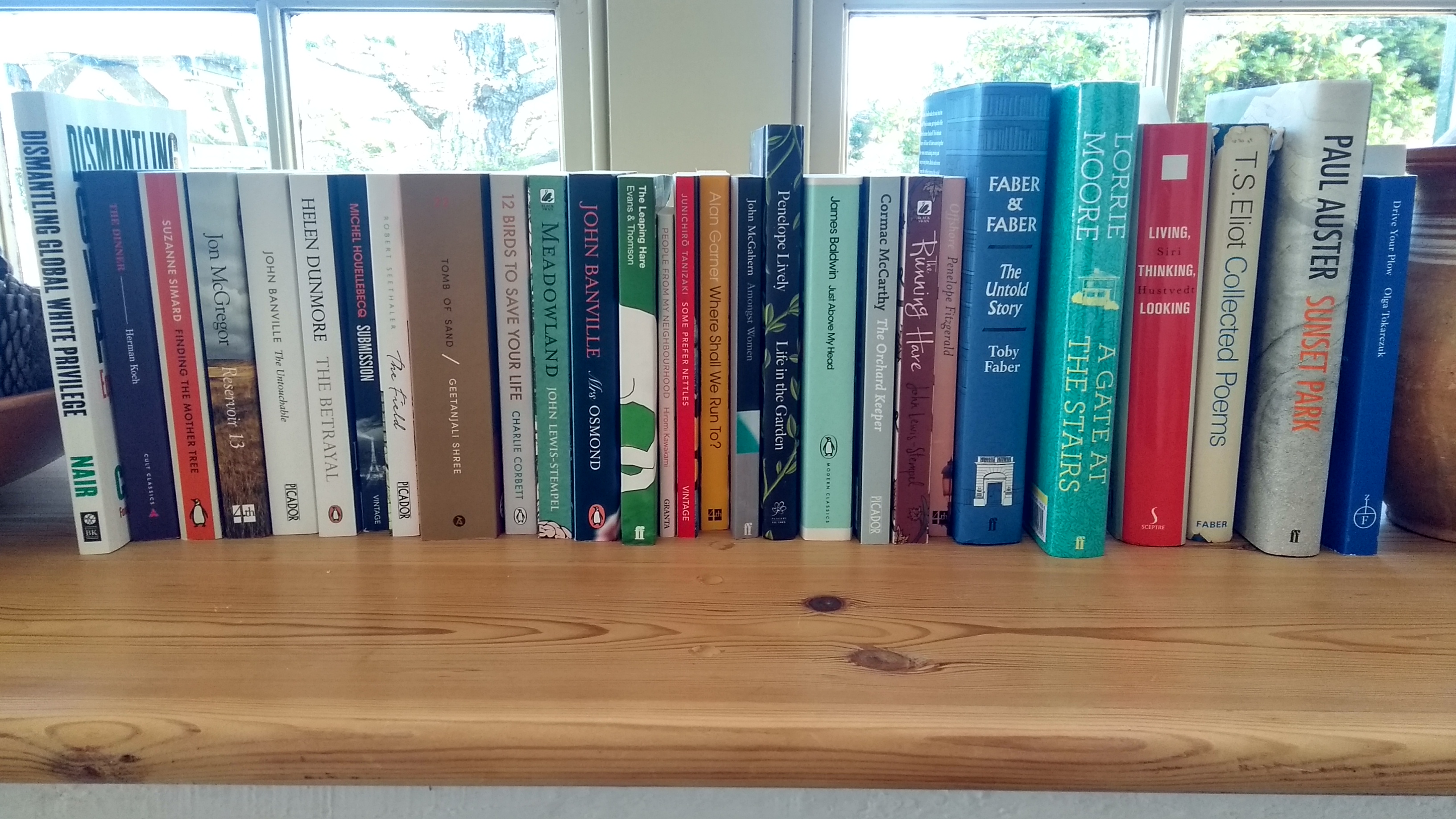
On vacation I do not read the newspapers or view the internet.  It is one of the joys of being on vacation and part of my digital detox [see ‘Digital detox with a deep vacation‘ on August 10th, 2016].  We usually take a large pile of books with us and this year was no exception – our shelf of books is shown in the photograph.  One novel stood out in particular: ‘Drive your plow over the bones of the dead‘ by Olga Tokarczuk.  One passage that resonanted with me was ‘Newspapers rely on keeping us in a constant state of anxiety, on diverting our emotions away from the things that really matter to us.’  Many of us suffer from a Fear Of Missing Out (FOMO) but in practice most changes reported in the media that directly impact our lives happen so slowly that we miss very little by disconnecting for a few weeks and it releases us to think.

Reference:

Olga Tokarczuk, Drive your bones over the bones of the dead, Fitzcarroldo Editions, 2022.
Blinded by reductionism

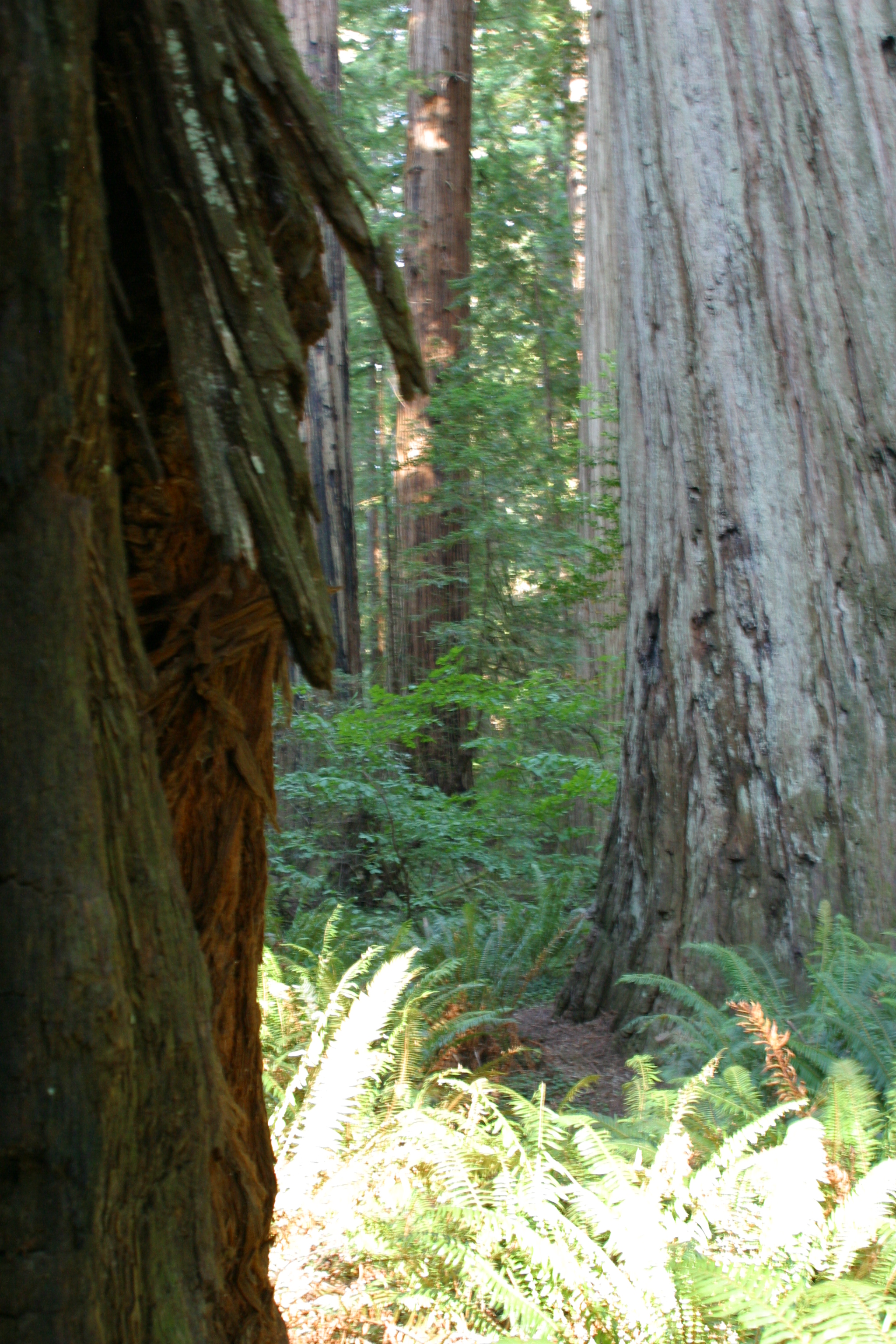
I wrote about the weakness of reductionism about 18 months ago [see ‘Reduction in usefulness of reductionism‘ on February 17th, 2021].  Reductionism is the concept that everything about a complex system can be understood by reducing it to the smallest constituent part.  The concept is flawed because complex systems exhibit emergent properties [see ‘Emergent properties‘ on September 16th, 2015] that appear at a certain level of complexity but do not exist at lower levels.  Life is an emergent property so when you reduce an organism to its constituent parts, for instance by dissection, you kill it and are unable to observe its normal behaviour.  Reductionism is widespread in Western science and has been blinding us to what is often well-known to aboriginal people, i.e., the interconnectedness of nature.  One example is forest ecosystems that Suzanne Simard, amongst others, has shown are complex synergistic, multi-scale organisations of species. Complexity is only hard for those who have not thought about it – it is obvious to many peoples whose lives are integrated in nature’s ecosystem but it is really difficult for those of us educated in the reductionist tradition.

Reference:

Suzanne Simard, Finding the Mother Tree, Penguin, 2021.

Merseyside Totemy

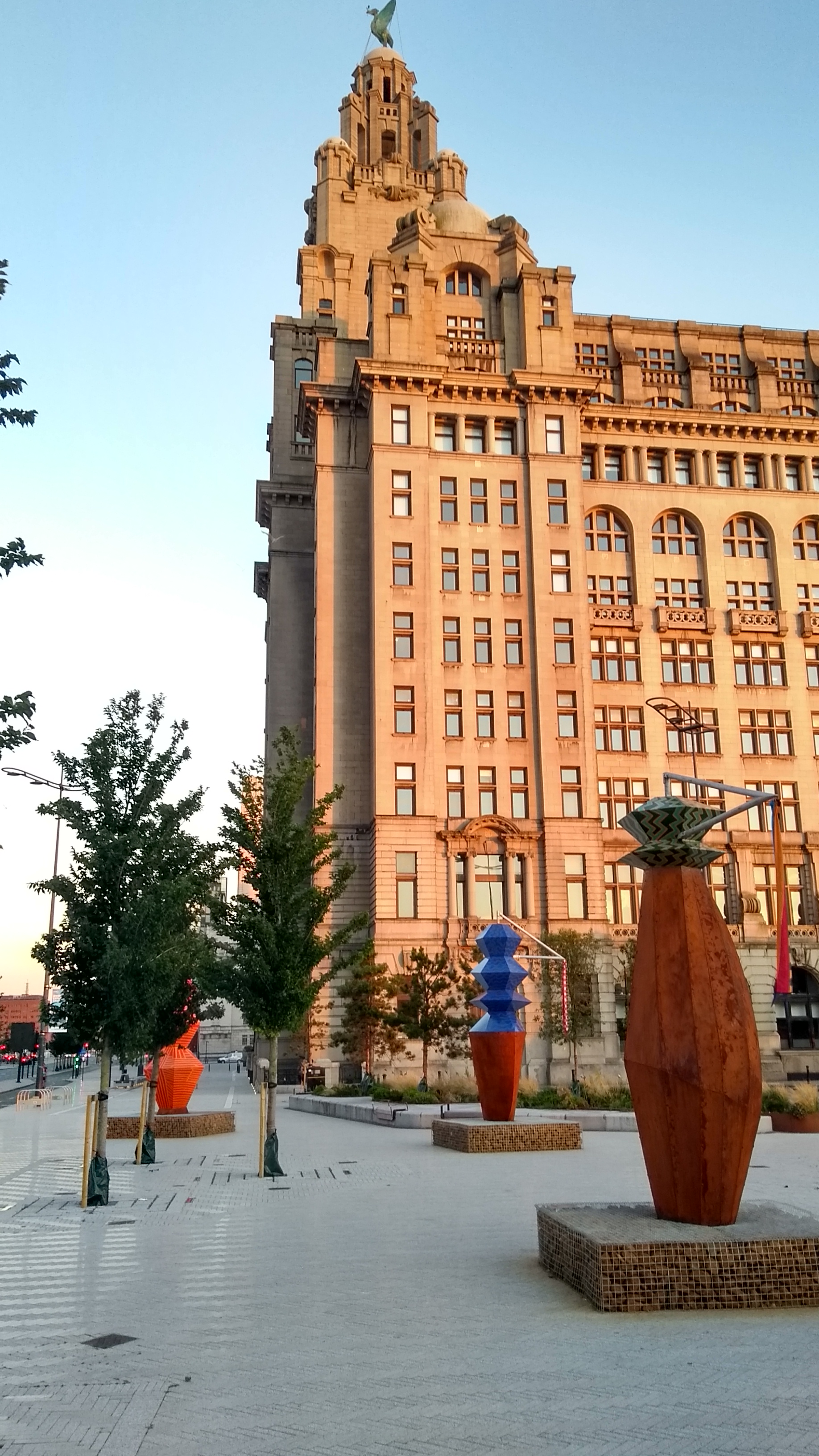
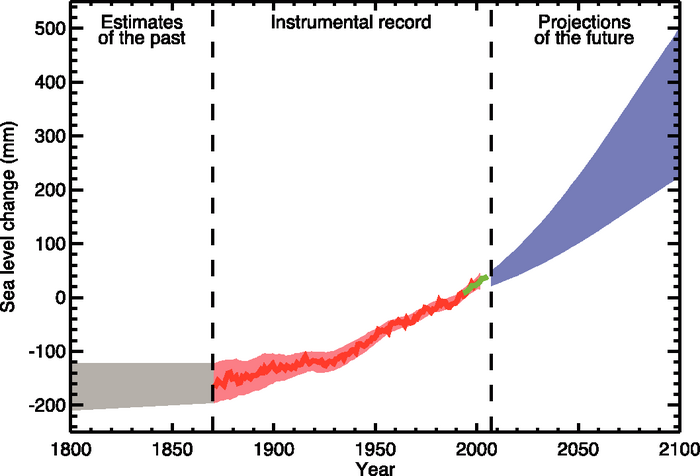
The recent extreme weather is perhaps leading more people to appreciate the changes in our climate are real and likely to have a serious impact on our way of life [see ‘Climate change and tides in Liverpool‘ on May 11th, 2016].  However, I suspect that most people do not appreciate the likely catastrophic effect of global warming.  For example, during the 20th century, the average rise is sea level was 1.7 mm per year; however, since the early 1990s it has been rising at 3 mm per year, and sea levels are currently rising at about 4mm per year according to the Intergovernmental Panel on Climate Change.  It is difficult to translate  statistics of this type into a meaningful format – the graph below helps in recognising the trends but does not convey anything about the impact.  However, I am impressed by a new art installation on the Liverpool waterfront by Alicja Biala called ‘Merseyside Totemy’ which illustrates the percentage of each of three high-risk local areas that will be underwater by 2080 if current trends continue: Birkenhead (centre of photograph), Formby (left) and Liverpool City Centre (right behind tree) [see www.biennial.com/collaborations/alicjabiala].  Perhaps using data for 30 years time rather than 60 years would have focussed people’s attention on the need to make changes to alleviate the impact.

Figure 1 from

Figure 1. Time series of global mean sea level (deviation from the 1980-1999 mean) in the past and as projected for the future. For the period before 1870, global measurements of sea level are not available. The grey shading shows the uncertainty in the estimated long-term rate of sea level change. The red line is a reconstruction of global mean sea level from tide gauges, and the red shading denotes the range of variations from a smooth curve. The green line shows global mean sea level observed from satellite altimetry. The blue shading represents the range of model projections for the SRES A1B scenario for the 21st century, relative to the 1980 to 1999 mean, and has been calculated independently from the observations. Beyond 2100, the projections are increasingly dependent on the emissions scenario. Over many centuries or millennia, sea level could rise by several metres. From https://archive.ipcc.ch/publications_and_data/ar4/wg1/en/faq-5-1-figure-1.html

Enjoying open spaces and large horizons

Moonlight on Lizard PointI am on vacation and off-grid so just a picture this week. It is a night time view from the cottage we stayed at in 2017 on the Lizard in Cornwall. If you have withdrawal symptoms from this blog then follow the links to find out why you need a vacation too! Gone walking posted on April 19th, 2017. Digital detox with a deep vacation posted on August 10th, 2016. Deep vacation posted on July 29th, 2015.