Category Archives: everyday engineering examples

Singing in the rain

Followers of this blog might have deduced that I live within sight of the sea, which means that it is nearly always windy.  After a rain storm the streets of the city are usually littered with broken umbrellas.  I suspect that most of these belong to the many tourists that visit Liverpool, because local residents know that the wind will wreck any umbrella that you are brave enough or foolish enough to put up.

It is relatively straightforward to estimate the forces involved in holding an umbrella up in a gale by using control volume analysis.  The lesson plan below includes this Everyday Engineering Example together with two more control volume analyses.

Momentum 5EplanNoF5_momentum

The title of the posting is pretty tenuous this week: Gene Kelly sings ‘Singin’ in the rain’ without an umbrella in the film of the same name, see www.youtube.com/watch?v=D1ZYhVpdXbQ – well its difficult to be creative all of the time, or even some of the time!

See also the Everyday Engineering Examples page on this blog for more lesson plans and more background on Everyday Engineering Examples.

Reducing tension

bubbleHave you ever tried to float a paperclip in a bowl of water?  It is quite difficult but possible if you put the paperclip on a piece of tissue paper and carefully place the tissue paper with the paperclip onto the surface of the water; then, using a pencil slowly push the tissue underwater and, with a little bit of luck and practice, the paperclip will be left floating on the surface of the water.  The surface tension of the water counteracts the gravitational force on the paperclip.  This is the same mechanism that allows some insects to ‘skate’ across the surface of ponds.

Detergent is a surfactant which reduces the surface tension of the water.  So, if you drop a little bit into your bowl of water the paperclip will sink because the surface tension is no longer sufficient to support it.

This is not an experiment to demonstrate in class because it is too delicate and too small for students to see but students can do it for themselves at home.  An alternative for demonstrating surface tension effects is to blow bubbles using a detergent solution.  These two ‘Everyday Engineering Examples’ are described in the lesson plan below and you can watch a video clip about it at www.youtube.com/watch?v=BRyQvGEQUt0

5EplanNoF1_fluids&their_properties

See also the Everyday Engineering Examples page on this blog for more lesson plans and more background on Everyday Examples.

Slam dunk

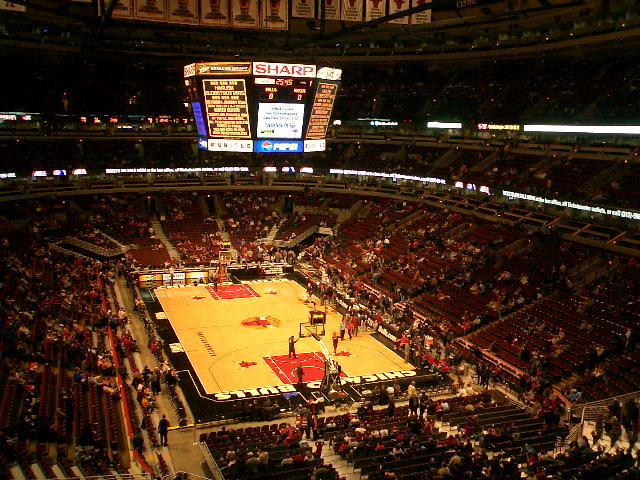
CIMG0176Here is another lesson plan for use in teaching engineering science.  This one is based on the stress generated by a slam dunk in basketball.  Sports provide many potential Everyday Examples but caution needs taken in selecting them because not all students are interested in or participate in sports.  Research has shown that the context of examples should be familiar to all students in a class.  Otherwise students will be worrying about the context and will not be listening to the explanation of the engineering science.  Examples will be perceived as tedious intellectual exercises unless that allow questions to be posed that have interesting or useful answers.  Student motivation is closely linked to their perception of the usefulness of the exercise.

When Everyday Examples are set in a familiar context and yield fruitful outcomes, then the level of student engagement and learning is not influenced by the level of difficulty.  So there is no need to idealise a scenario to an elementary problem prior to applying engineering principles.  And here is the proverbial slam dunk, instructors who successful incorporate appropriate Everyday Examples into their lectures are likely to be rated more highly by their students, regardless of the associated level of difficulty.

Lesson plan: 5EplanNoS9_eccentric_loading

See the Everyday Examples page on this blog for more lesson plans and more background on Everyday Examples.

March Madness

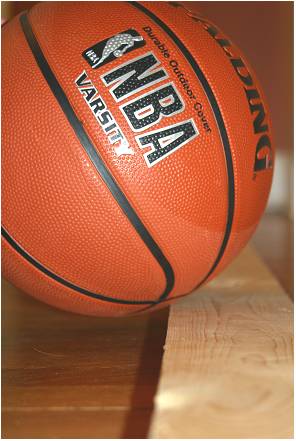
basketballSome of you will be familiar with ‘March Madness’ which starts next week.  It is a couple of weeks in March when US universities play a knockout basketball competition.  At Michigan State University, where I used to be a professor, there would be huge disappointed if we did not make it into the final sixteen and great excitement if we were in the final four or even the final.

Basketballs can be a useful, and in the USA in March topical, prop to use in teaching dynamics.  In the lesson plan below angular momentum is used to investigate a basketball rolling over an obstacle, which could be someone’s foot rather than wooden block used in the example.  Of course, with 91 days to go until the start of the FIFA World Cup in Brazil, you could easily switch to a football.

5EplanNoD9_Impulse&momentum_methods

See the Everyday Examples page on this blog for more lesson plans and more background on Everyday Examples.