Tag Archives: Thermodynamics

Entropy management for bees and flights

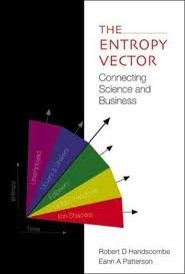
entropy_vectorEngineers like to apply the second law of thermodynamics to chemical processes and power generation cycles. However, it has some useful lessons for everyday life since it can be paraphrased as ‘whenever you organise any process expect some disorder, or entropy to be generated’, so a shrewd person plans for disorder and designs in a bit of slack or redundancy.

Bob and I gave an example of this in our book, ‘The Entropy Vector’.  We pointed out that if you plan your flight schedule to use all of the available gates at an airport then you will have unhappy passengers when flights are delayed, unless you plan for buses to unload planes parked away from the terminal. European airports tend to be good at this whereas US ones tend to leave passengers in planes that are unable to dock at the terminal.

Our example was inspired by frustrating experiences when we were writing the book. A more topical and important example was raised by Mark Winston in the New York Times on July 14th, 2014 in reporting the importance of bees to farming. His research team found that crop yields were maximised when large acreages were left uncultivated to support wild pollinators. He postulated that a variety of wild plants means a healthier, more diverse bee population which will be more active in the planted fields next door. Their numbers were startling with profits more than doubling for farmers that left a third of their acreage fallow. Winston highlights that this contravenes conventional wisdom that bees and fields can be micromanaged.

This seems like reinventing the wheel because I remember being taught about the importance of crop rotation, including a fallow period, in my ‘middle’ school geography classes. Oh dear, now I am showing my age.

The bottom-line is don’t micromanage. Allow for a bit of inefficiency, not too much of course or your competitors will get ahead! It’s a question of balance.

Cold power

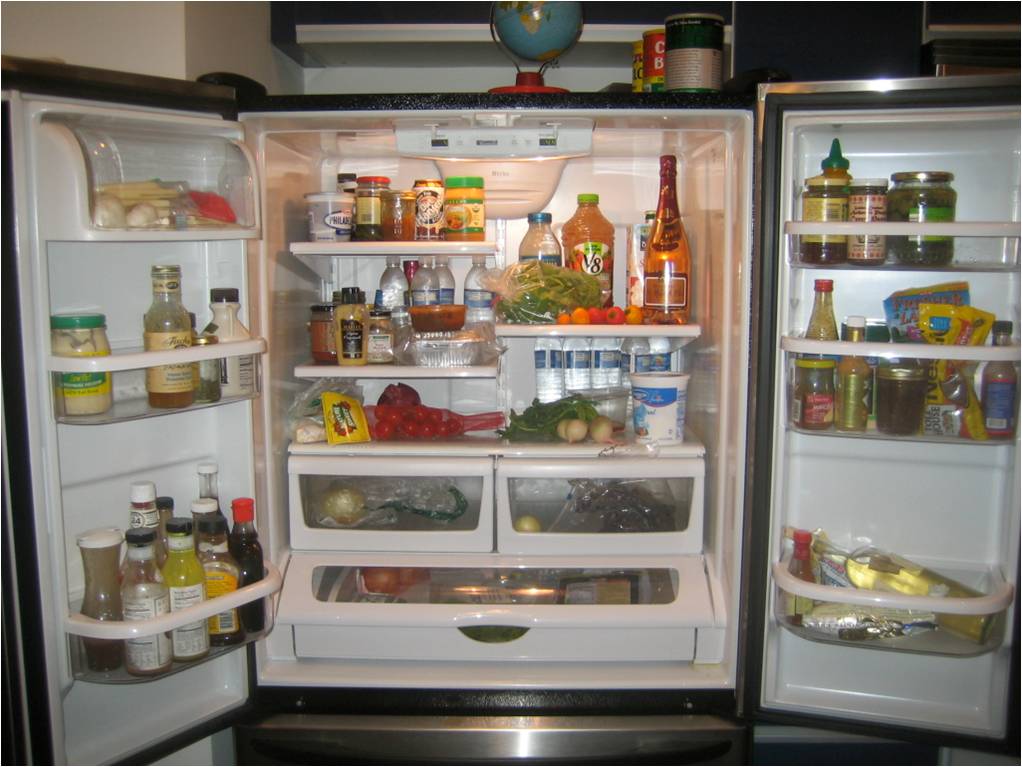
Last week I wrote about heat transfer into fridges in the context of operation in vacation mode.  It is tempting to think that if energy is moving into the fridge as a result of heat transfer from the warm room to the cold food compartment in the fridge, then why can’t we use the energy to power the fridge.  A fridge that operated on this basis would be categorised as a perpetual motion machine of the second type because it would contravene the second law of thermodynamics and so it can’t exist.  One of the great pioneers of thermodynamics, Rudolf Clausius expressed the second law as ‘heat does not pass from a body at a low temperature to one at high temperature without an accompanying change elsewhere’.  In other words, something has to be done, generally in the form of work, to move energy from a cold to hot place, e.g. from the food compartment of the fridge to the warmer room.

refrigeration cycle


In a domestic fridge, the work is supplied in the form of electricity to drive a compressor – that’s the thing making most of the noise coming from your fridge.  It is compressing a refrigerant gas (typically from atmospheric pressure to about 8 times atmospheric pressure) and in the process raising its temperature (perhaps by 80°C) as it pushes the gas into a condenser.  In the condenser, the hot refrigerant transfers heat to the colder room and in the process condenses from a gas to liquid dropping its temperature, perhaps by 30°C.  Then, the liquid refrigerant flows into an expansion valve where its rapid expansion to a gas lowers both its temperature (perhaps to -20°C) and pressure (typically from 8 times atmospheric pressure back to atmospheric) before it is sucked into the heat exchanger inside the food compartment where its very low temperature causes heat transfer from the compartment to the refrigerant, i.e. it removes the unwanted energy.  The compressor sucks the gas out of the heat exchanger and the whole cycle starts again with the unwanted energy being dumped into the room by the condenser, which is the warm panel on the back of your fridge.

If you understood all of that then well done, if not then try again following the steps on the schematic diagram.

The temperatures and pressures are expressed rather vaguely because they depend on the design of the fridge and the settings you select on the control panel.

Vacation mode

fridge2Many people are in vacation mode at the moment.  In some organisations it is impossible to hold meetings because of non-overlapping holidays, unless of course you work in countries where everyone goes on holiday at the same time – try getting in or out of Paris on certain weekends in August!  We have been away already and when we got back home one question that was asked is ‘What was the fridge/freezer doing while it was set on vacation mode?’  Fridge and freezers are one of the largest consumers of power in most households so saving energy while we are away on vacation makes sense and there are a number of strategies adopted by different manufacturers.  The most common one is to raise the temperature of the fridge compartment to around 39°F or 4°C which is just cold enough to prevent bacterial growth. Energy movement due to heat transfer is proportional to the temperature difference. Hence, if the temperature difference between the fridge and its surroundings is reduced then there will be less heat transfer into the fridge and less energy will be expended to remove it and keep the contents cold.  Of course the door being shut thoroughout the vacation helps.

In normal use, when we open the door there is heat transfer into the fridge from the warmer room which raises the energy level inside the fridge.  This energy is stored as internal energy in the air and fridge contents and temperature is a measure of this internal energy level, i.e. the temperature goes up.  The fridge has to perform work to remove the internal energy and reduce the temperature.  The situation is exacerbated by the light inside the fridge which comes on when the door is opened because the light bulb generates heat, this is the basis of Everyday Engineering Example about the extra cost of running of a fridge when the light stays on permanently because the switch is broken.

Back to vacation mode for a moment, most fridge/freezers also de-activate the automatic defrost function in vacation mode as well, to save energy.

Sources:

Alison for asking the question – thank you.

Information on safe food storage – Food Safety and Inspection Service

Thunderous applause

2d543f31-6f09-43ba-875c-c2d5d3bd0cebI have had cause to applause enthusiastically on two recent occasions. We went to see ‘Dead Dog in a Suitcase’ at the Everyman Theatre in Liverpool. It was fantastic and we joined in a standing ovation at the end. It’s a beggar’s opera that throughly deserved the rave reviews that it has received. It is full of energy, music, wit and spectacular performances.

The second occasion was my son’s graduation in Durham Cathedral. The programme asked us not to applaud as each graduand’s name was read out and they walked onto to the podium to shake the hand of the Chancellor, Sir Thomas Allen, but to hold our applause until the end. So, the last graduand walked off the podium to thunderous applause. Sir Thomas is an opera singer with a sonorous speaking voice and he gave a theatrical entertaining speech that we applauded enthusiastically and appreciatively. It is the tradition at Durham to applaud the new graduates as they walk down the aisle to leave the Cathedral. It’s a long aisle, there were a lot of graduates and we clapped energetically so that by the time the end of the line reached the door our hands were smarting.

You are right. There has been no mention of engineering, yet. However, here it comes. The heat and stinging sensation in the palms of my hands as the last graduate left the cathedral reminded me briefly of an example from my first year thermodynamics lectures in which I estimated the temperature rise in the skin of the hand from vigorous clapping ten times. This was more an exercise in estimating and problem definition than thermodynamics as you will see from the attached worksheet (clapping_example.pdf), but those skills are as important to an engineer as a knowledge of the laws of thermodynamics. Its also another Everyday Example and the experimental part can be performed at home.