 My enthusiasm for the concert we went to some weeks ago is only just beginning to fade [see Rhapsody in Blue posted on 5th February, 2014]. I have one of Michel Camilo’s pieces still going around in head [listen here]. On the subject of playing the piano, people are trying to build robots that can play the piano using rubbery fingers although they have had more success with a robot that can play a violin [see this Youtube clip].
These robots might be clunky or primitive compared to a maestro like Michel Camilo, but nevertheless smart machines are coming. Professor Noriko Arai is developing a computer, called Todai-Kun, that could ace college entrance exams. She hopes that by 2021 Todai-Kun will pass the entrance exam for Tokyo University, which is the top university in Japan. It is tough for graduates to find jobs at the moment, so imagine what it will be like if computers are as smart as graduates!
Mechanisation destroyed jobs on the farm, robots have replaced assembly-line workers and now smart computers are going to replace white collar workers. In the future, if you want a well-paid job you are likely to need niche skills that involve a combination of creativity, innovation, problem-solving and leadership. I am probably biased but that sounds like a professional engineer.
In the same context, David Brooks has suggested that, what he calls the ’emotive traits’ will be required for success, i.e. a voracious lust of understanding, an enthusiasm for work, the ability to grasp the gist and an empathetic sensitivity for what will attract attention, which with the exception of the last one also sound like the attributes of a professional engineer.
I have used the violin playing robot as the focus for a 5E lesson plan on the Kinematics of Rigid bodies in 3-dimensions see: 5EplanNoD10_Kinematics_of_rigid_bodies_in_3D . Not quite an ‘Everyday Example’ but one with which many students can connect.
Sources:
http://www.nytimes.com/2013/12/30/world/asia/computers-jump-to-the-head-of-the-class.html?_r=0
http://www.nytimes.com/2014/02/04/opinion/brooks-what-machines-cant-do.html?_r=0
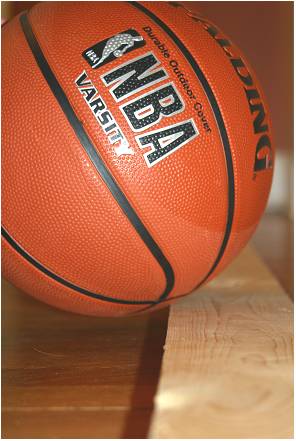 Some of you will be familiar with ‘March Madness’ which starts next week. It is a couple of weeks in March when US universities play a knockout basketball competition. At Michigan State University, where I used to be a professor, there would be huge disappointed if we did not make it into the final sixteen and great excitement if we were in the final four or even the final.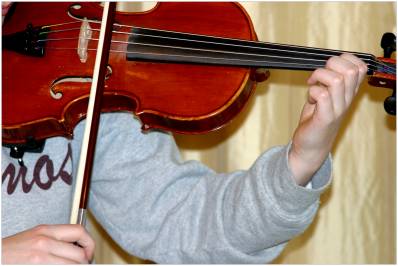
 Realize Engineering