Category Archives: energy science

Sonic screwdrivers

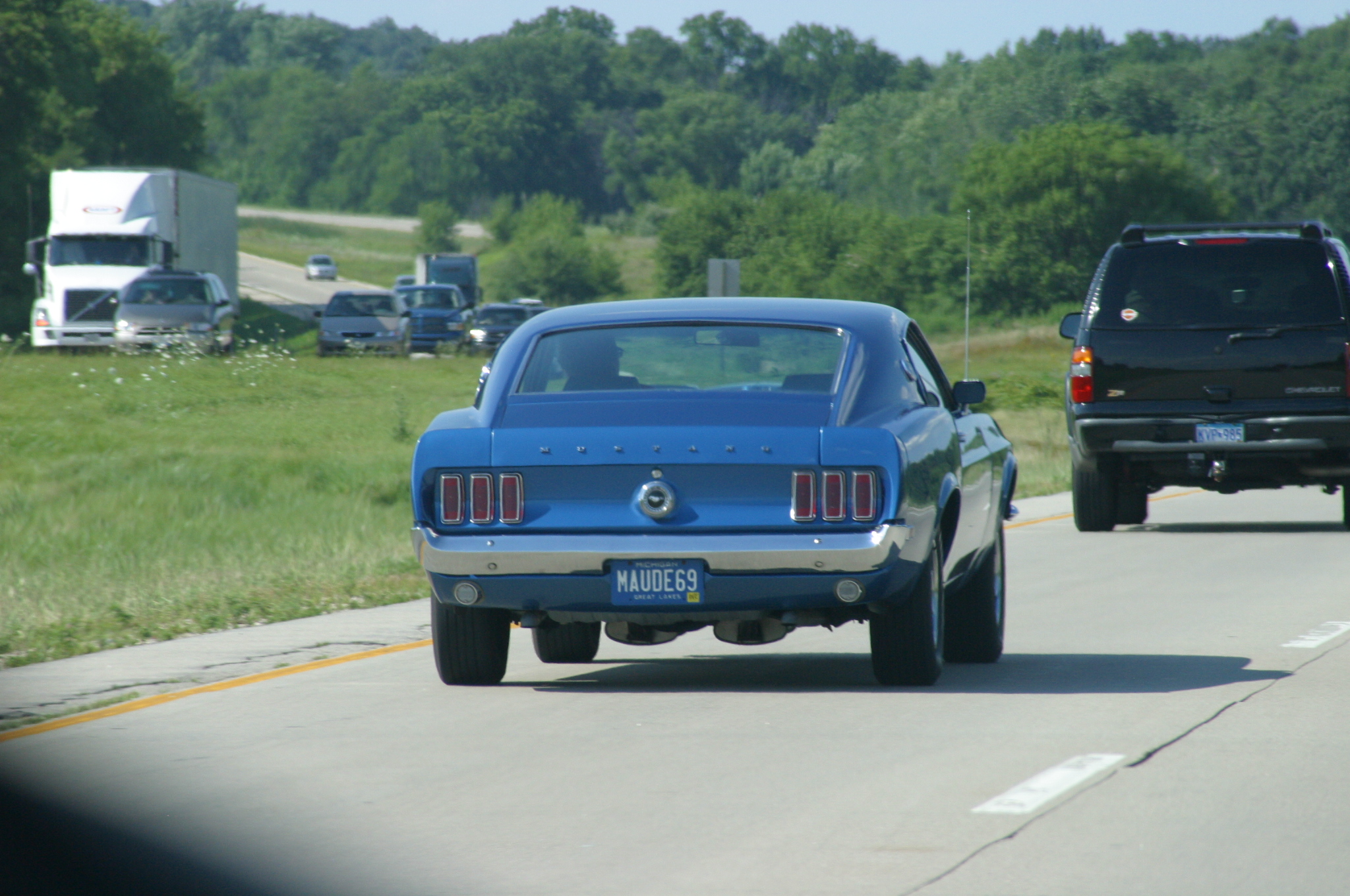
138-3816_IMG

No relevance except for the tranquility or absence of noise.

In a recent post on Noise Transfer [27th March, 2013] I highlighted the parallels between energy transfer by heat and noise.  In many cases, the heat and, or noise transfer is by-product of a process through which energy is dispersed to satisfy the requirements of the second law of thermodynamics, that entropy must increase as a product of all real processes.  Entropy, can be interpreted as a measure of dispersion, or the lack of availability to do anything useful and this applies to most heat and noise that we encounter in everyday life.

We can use concentrated sources of heat to produce useful work such as the furnace in a power station, but the second law of thermodynamics demands that we waste a substantial proportion of it through the creation of entropy.  It is also possible to use concentrated sources of noise, such as ultrasonic transducer to perform useful work for us, such as in surgery and the manufacture of composite materials [see Professional Engineering, http://profeng.com/features/good-vibrations ]; although an all-purpose sonic screw-driver of the kind used by Dr Who is not possible, yet.

Noise transfer

This is not the author's house!

This is not the author’s house!

We are privileged to have magnificent views of the river and mountains beyond from our city centre house.  However, the house was built before the motor car was invented when the loudest event outside might have been rowdy party-goers heading for home.  We still have some party-goers walking home under our bedroom window at night but most of them travel by noisy taxis.  I look forward to when the price of fossil fuels, or legislation will force taxis to become electric-powered.  In the meantime, we have been designing secondary glazing that will offer a high resistance to noise transmission and be in keeping with the early 19th century windows.  Noise is a form of energy transfer by vibrations, acoustic energy would be an alternative term for it, and so the combined resistance of the outside wall of my bedroom can be calculated using Kirchhoff’s law, as discussed for heat transfer in my last post [Born in a barn, 20th March, 2013].  In this case, the thin and badly-fitting but antique glass is the dominant component of both the heat and noise resistance.  We were happy to deal with the poor resistance to heat transfer by using plenty of bedclothes, i.e. adding a large resistance in series, but the same approach does not work with noise because earplugs are uncomfortable, fall out in your sleep and have a low resistance at the frequency of taxi-generated noise.  So, the solution is secondary glazing and the best performance is achieved using an acoustic laminate consisting of a polymer sandwiched between two sheets of glass which should be different thickness to avoid resonant effects.  Of course this will also improve the resistance to heat transfer which will be advantageous in winter, but perhaps not in summer…

Born in a barn

108-0858_IMGIn my previous post [Traffic hold-ups, 13th March 2013] the application of Kirchhoff’s Law to the flow of electrons, water and traffic was discussed.  In this context, electrical current or electrons were conceived as flowing.  Instead, electrical current can be considered as electrical energy being transferred across a potential difference, or voltage.  When this terminology is used, then it is only a short step to extend the use of Kirchhoff’s law to consider the combined effect of multiple resistance to other forms of energy transfer, such as heat transfer.  Heat transfer occurs across a temperature difference, from hot to cold, and some materials offer more resistance than others, e.g. wood compared to glass.  Kirchhoff’s law can be used to calculate the total resistance to heat transfer of complex structure such as a house wall that some components in series, e.g. layers of brick, insulation and plasterboard, and some in parallel, e.g. doors and windows.  This information is important in designing a house to achieve minimum energy consumption and to specify the heating and cooling systems required.  Note that the inverse form of Kirchhoff’s Law means that the low resistance to heat transfer of a door or window dominates the heat transfer characteristics of a well-insulated structure.  Of course, the extreme case is when you leave the door open and on a cold day someone shouts at you: ‘Were you born in a barn?’.

Traffic hold-ups

107-0722_IMGGustav Kirchhoff graduated from the University of Konigsberg in 1847 and married his professor’s daughter.  Many people are familiar with his name from studying electrical circuits at school.  His circuit law is an extension of the law of conservation of energy and governs how to combine the effect of multiple electrical resistors.  When resistors are connected in series, i.e. like barges towed by a tug one behind the other, then the value of the resistances can be added together to give a total resistance for the set of resistors.  So, three resistors of 2, 4 and 8 ohms connected in series provide a total resistance of 14 ohms.

However, when resistors are connected in parallel, i.e. like barges strapped alongside the tug, then the calculation of the combined resistance is a little more involved.  The inverse or reciprocal of each resistance must be added together and then the inverse taken of the sum.  So, three resistors of 2, 4 and 8 ohms connected in parallel provide a total resistance of 8/7 ohms [=1/(0.5+0.25+0.125)].

In a parallel circuit, the electrons have a choice about which resistance to flow through.  The same idea can be extend to the resistance to flow in water pipes and to traffic flow.  For traffic flow, the effect of road-works and other hold-ups on multiple routes can be modelled.