
An engineering commentary for everyone once a month
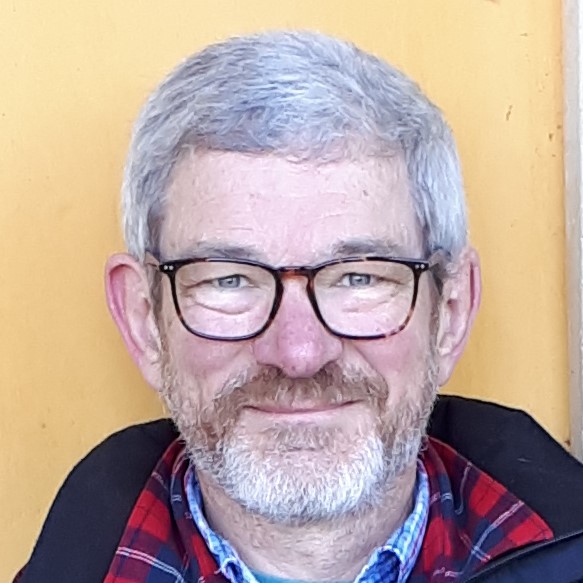
Writer, engineer and professor (not necessarily in that order)
For eleven years I published a post every Wednesday so there is an archive of 600 posts to browse. At the start of 2024, I switched to publishing on the first Wednesday of each month [see ‘600th post and time for a change‘ on 03/01/24].
Why ‘Realize Engineering’? Well, if you look up ‘realize’ in the dictionary then one of the meanings, some way down the list, is ‘to be fully aware‘ and one of my aims in establishing this site is to make people more aware, and perhaps encourage them to become fully aware, of some aspects of engineering.
There is much less talk about the public understanding of engineering than of science. My intention is to make a small contribution towards correcting this imbalance. In simple terms, engineering could be described as the application of science. We have ‘popular science’ so why not ‘popular engineering’? Prior to starting this blog in 2011, I had been working on how to engage undergraduates in the principles of engineering, so this blog was natural extension of this activity, which I was stimulated to start by a Royal Society Wolfson Research Merit Award.
My early research was in the field of experimental mechanics which is described in a series of early posts on this blog called ‘Experimental Mechanics‘ [on 11/07/2012], ‘Art & Expermental Mechanics‘ [on 17/07/2012] and ‘Why Mechanics?’ [on 19/07/2012] . Subsequently, the focus of my research shifted to applied mechanics and applications in biology, aerospace engineering and civil nuclear power [see for example, ‘Label-free real-time tracking of individual bacterium‘ on 25/01/22; ‘Jigsaw puzzling without a picture‘ on 27/10/21, or ‘Structural damage assessment using infrared detectors in fusion environments‘ on 15/03/23]. At the moment, I am focussed on making measurements in extreme environments and using them to support cyber-physical twins, see for example ‘Digital twins that thrive in the real-world‘ on 09/06/21.

You are free to share, copy and redistribute in any medium or format and to adapt, remix, transform and build upon the material in this blog, providing you give appropriate credit, provide a link to the license and indicate if changes were made. You may do so in any reasonable manner, but not in any way that suggests the licensor endorses you or your use. You may not use the material in this blog for commercial purposes (Creative Commons: Attribution-NonCommercial 4.0 International). The attribution should be to Eann A. Patterson, The University of Liverpool.
Disclaimer: the views and opinions expressed on this blog are those of the author and not those of any organisation with which he is associated.
 Realize Engineering
Pingback: Slow start to an exciting new project on thermoacoustic response of AM metals | Realize Engineering